
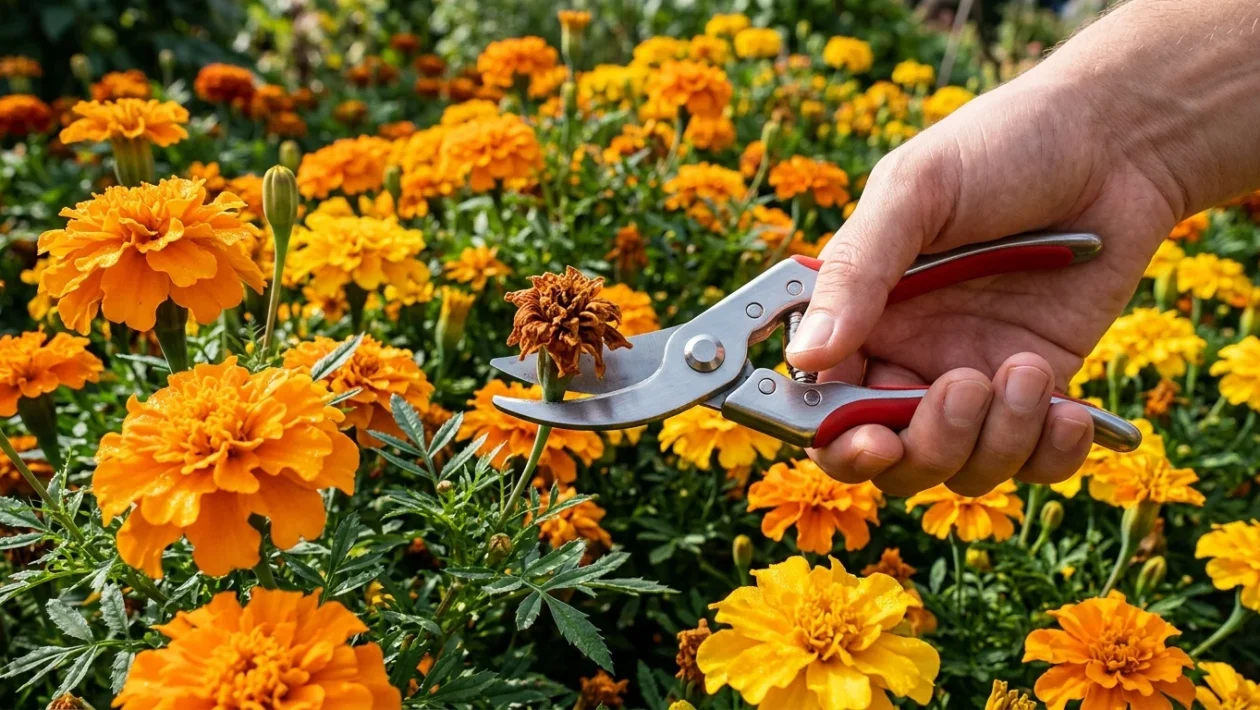
A gardener’s fingers pinching off a dried, brown marigold bloom from a healthy green plant.
Marigolds are absolute garden workhorses. They require minimal upkeep and reliably pump out bright, warm colors from early summer straight through the fall.
But frequent flowering comes with a catch. Soon enough, you are left staring at withered, brown blooms scattered across an otherwise healthy plant.
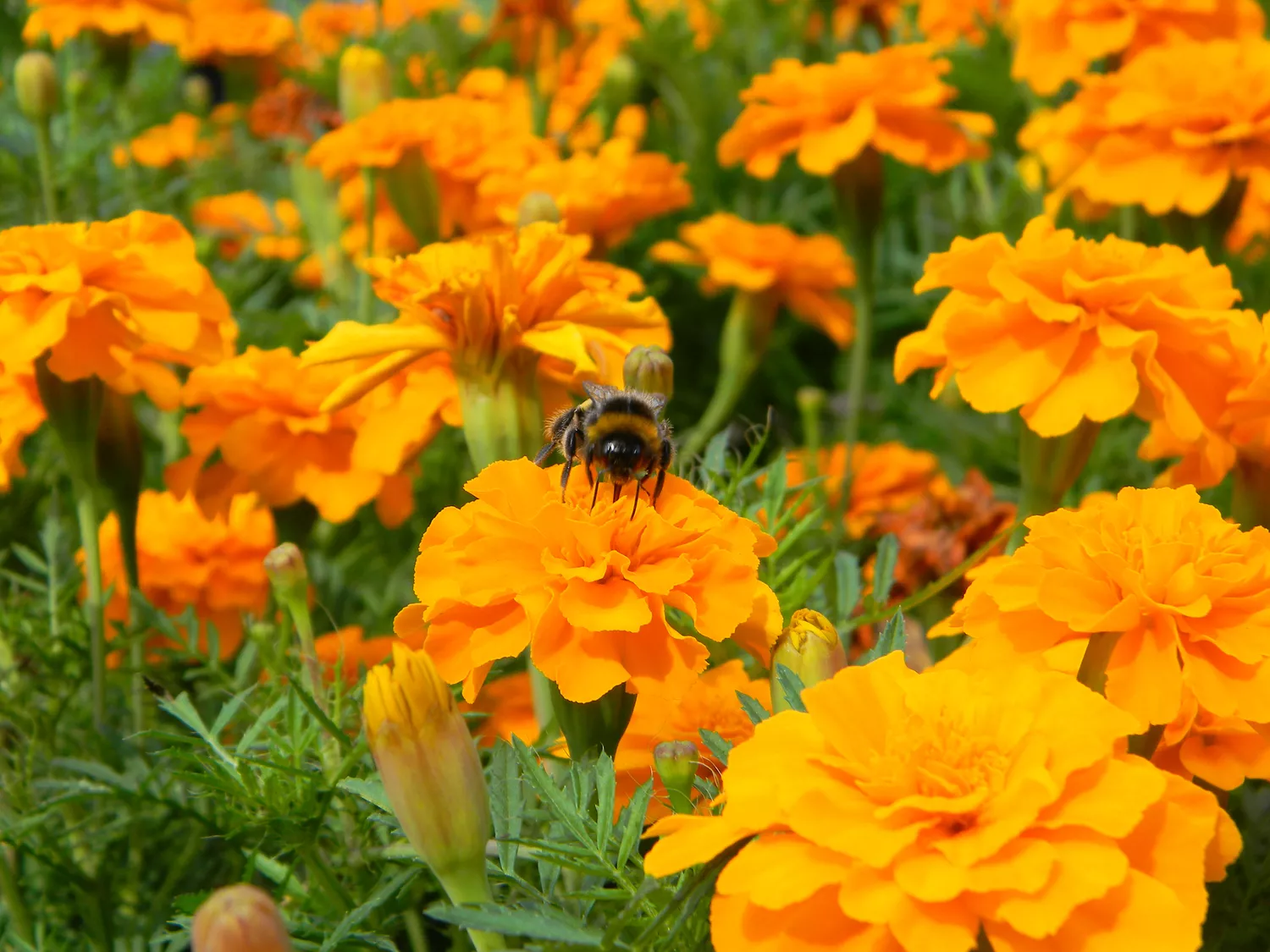
Bright orange marigold flowers clustered tightly together among green foliage.
Knowing exactly what to do with these spent blossoms is the difference between an early end to your garden’s color and a prolonged, vibrant display.
To Cut or Not to Cut?
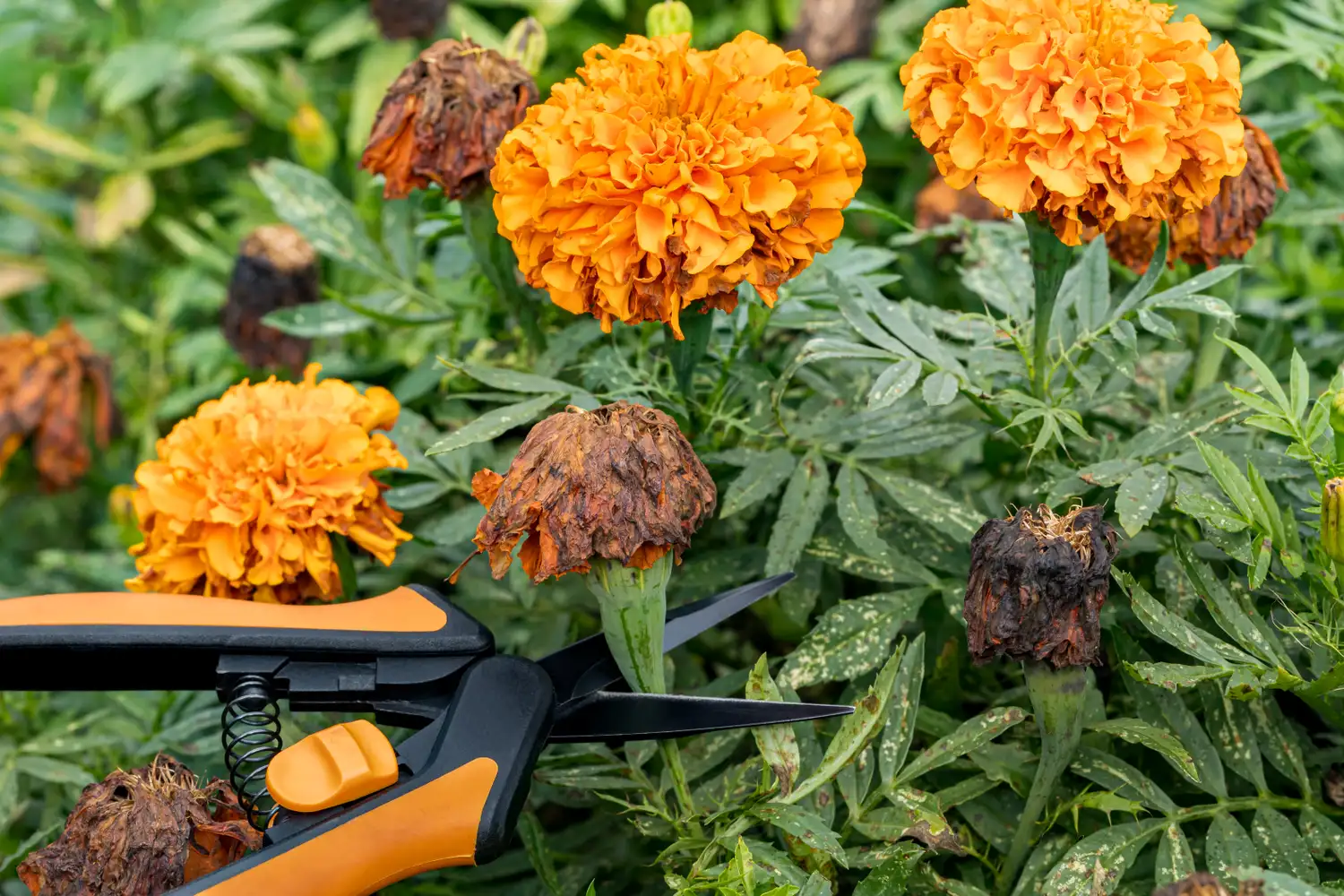
Close-up of dried and wilting marigold flower heads ready for removal.
The short answer is yes—you should cut them. Dead blooms from healthy plants can safely go straight into your compost pile. However, your pruning approach depends entirely on the variety you planted.
Annual marigolds can either be cut all the way down to the ground or pulled out completely at the end of their run, according to Lindsay Moss of the Hudson Valley Seed Company.
Perennials require a different strategy. “For perennial varieties such as Lemon Gem, you can either cut spent blossoms as they finish, or let it bloom in waves, trimming the whole plant at once to remove spent blossoms,” Moss explains.
Trimming the entire plant at once forces it to push out a massive, synchronized wave of fresh blooms.
Why Blooms Turn Brown
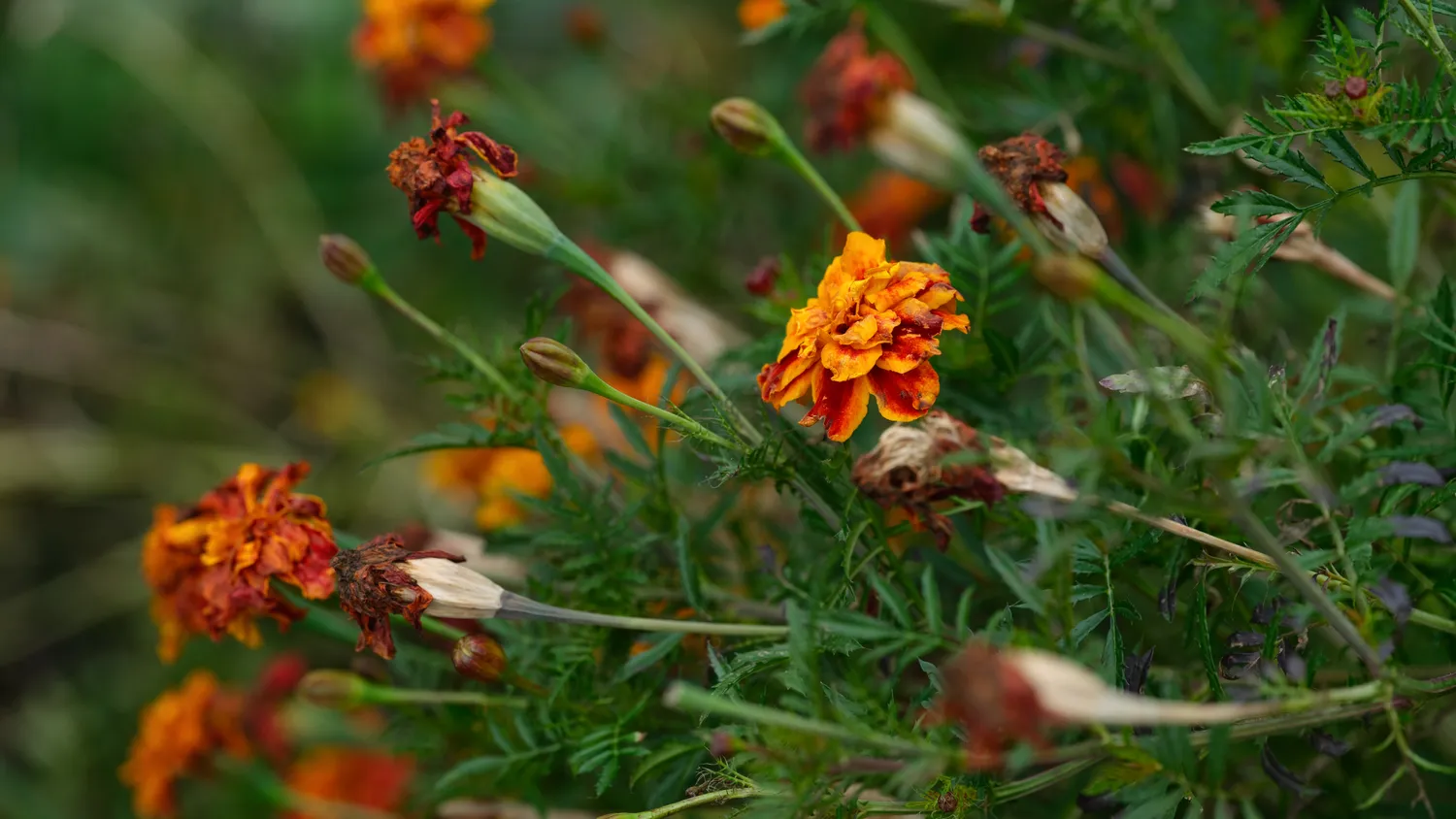
A gardener’s hand gently inspecting a wilting marigold blossom in the dirt.
A dead flower does not automatically mean a sick plant. Often, environmental stressors cause premature wilting.
“Usually, cultural conditions are the issue: too much water, not enough water, too hot, a cold snap, et cetera,” says Lorraine Ballato, an instructor at the New York Botanical Garden.
Pests and diseases are rarely the culprit, as marigolds naturally repel most insects.
In most cases, the flower simply finished its job. Once pollinated, the petals wither and fall off so the plant can redirect its energy into developing seeds inside the flower head.
If you leave these decaying flowers attached, the plant stops producing new buds. Without deadheading, marigolds produce fewer flowers overall and quit blooming far earlier in the season.
The Best Way to Deadhead
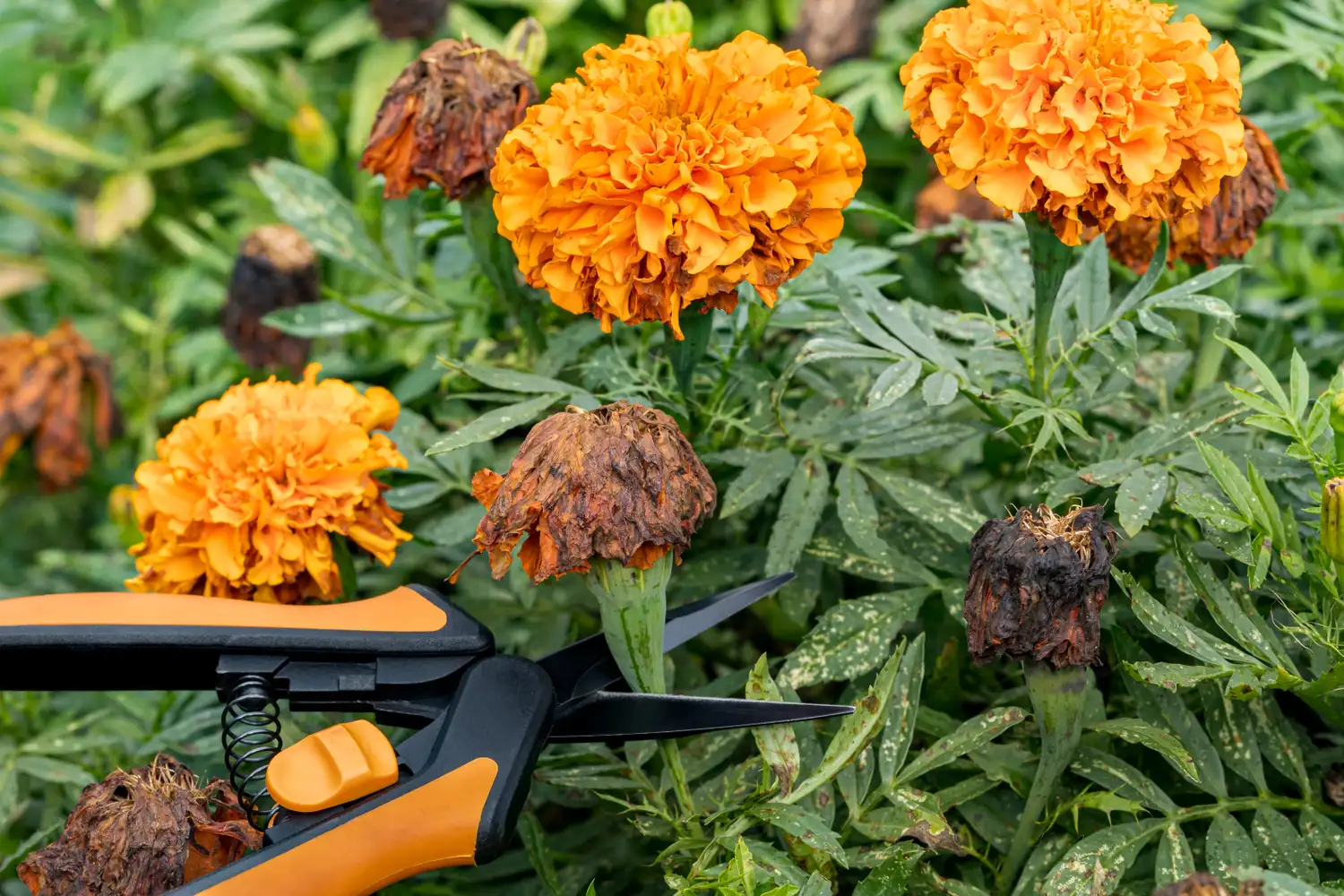
A person using gardening shears to carefully snip a dead flower off a plant stem.
Removing these spent flowers is a basic garden chore known as deadheading. You can use scissors, secateurs, snips, or just your bare hands.
“The standard technique for deadheading is to cut back to a leaf or branching stem,” Moss says.
Ballato offers a slightly different take based on visual preference, noting that cuts can be made anywhere along the stem, as long as you snip directly below the spent flower head.
Ultimately, marigolds are tough. If you lack proper shears, simply pinching the stem right behind the dead flower head works perfectly and causes no harm to the plant.
When Will New Flowers Appear?
Patience pays off quickly with this species. Once you clear away the dead growth, new marigold blooms typically emerge within one to two weeks.
By staying consistent and deadheading regularly, your marigolds will relentlessly push out fresh color right up until the first frost hits.


