
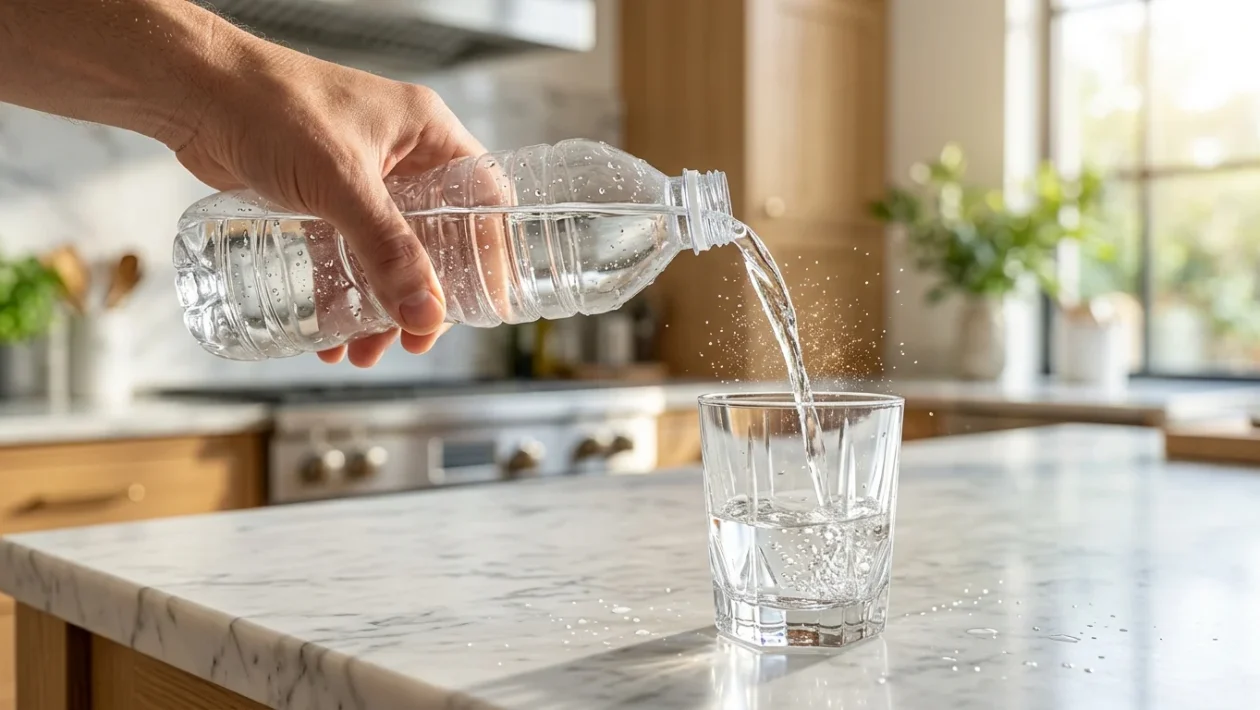
Close-up view of a clear plastic water bottle held against the light
A close-up view of a clear plastic water bottle.
Sarah Sajedi stood on the white sands of Phi Phi Island, Thailand, taking in the Andaman Sea. Then she looked at her feet. The beach was blanketed in plastic waste, heavily dominated by discarded water bottles.
A former co-founder of an environmental software company, Sajedi pivoted her career after that trip. She became a researcher to tackle the root of global waste: everyday consumer habits.
Now a PhD student at Canada’s Concordia University, Sajedi reviewed over 140 scientific papers detailing how plastic bottles impact the human body. Her findings reveal a stark reality for consumers.
Average individuals ingest between 39,000 and 52,000 microplastic particles annually through standard food and tap water. Those who drink bottled water daily consume nearly 90,000 additional microplastics every year.
“Drinking water from plastic bottles is inevitable in emergency situations, but it shouldn’t be used in everyday life,” Sajedi says. “Although immediate effects on the human body may not occur, we need to understand the potential for chronic damage.”
The Invisible Threat in Every Sip
Microplastics range from one micrometer to five millimeters in size, while nanoplastics are even smaller. These invisible fragments shed continuously during a bottle’s production, storage, transport, and physical breakdown.
Low-quality plastics degrade rapidly when exposed to sunlight, temperature shifts, or rough handling. Because these particles shed directly into the contained liquid, users swallow them instantly.
Once ingested, microscopic plastics can breach the bloodstream and accumulate in vital organs. This triggers chronic inflammation and cellular oxidative stress throughout the body.
Researchers link this internal exposure to hormonal disruptions, reproductive dysfunction, and nervous system damage. Emerging data also suggests connections to various types of cancer.
A Regulatory Void
The long-term consequences remain a medical mystery due to fractured testing methods. Some laboratory techniques can identify microscopic particles but fail to analyze their chemical makeup, while others map the chemistry but miss the smallest nanoplastics.
Highly accurate measuring equipment is also prohibitively expensive. Sajedi and her team note that this technical bottleneck prevents standardized, global research across institutions.
Governments worldwide are drafting laws to curb plastic waste, but these regulations primarily target single-use bags, straws, and packaging materials. Plastic water bottles remain largely unregulated on a global scale.
While parts of the US and Canada have launched progressive policies, a comprehensive global framework does not exist.
Plastic pollution represents a severe public health crisis. Building a sustainable, plastic-free global water supply is transitioning from an environmental goal to a medical necessity.


