
Tarnished silver rings and necklaces laid out before being cleaned.
Silver jewelry enthusiasts share a common frustration: the inevitable dark patina that ruins their favorite pieces. Necklaces and rings often end up abandoned in drawers once their bright finish fades.
Restoring them does not require expensive commercial cleaners. A basic chemical reaction using household staples gets the job done in minutes.
The Chemistry of Tarnish
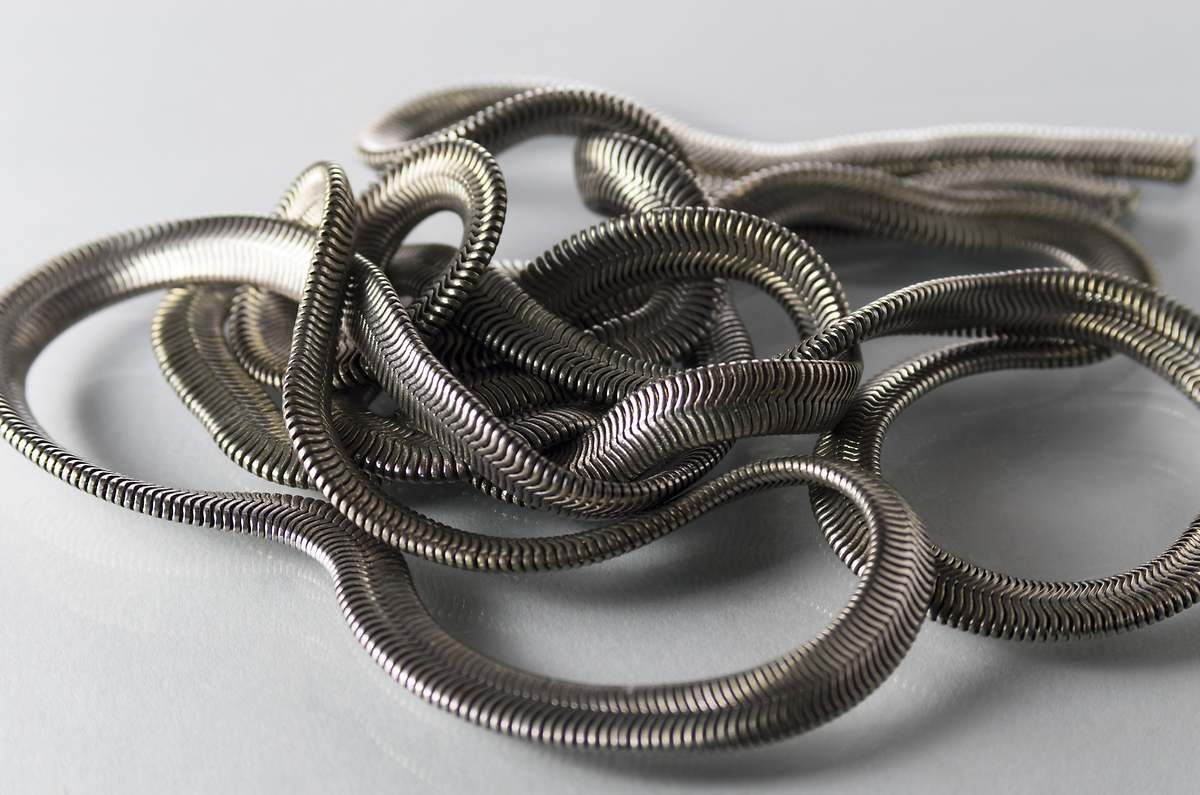
Comparison of tarnished metal surfaces requiring restoration
Silver turning black is a natural environmental reaction, not a sign of poor quality. When silver interacts with sulfur in the air, skin oils, and cosmetics, it forms a dark layer of silver sulfide.
This compound binds tightly to the metal’s surface, creating a dull, blackened appearance.
The Electrolysis Solution
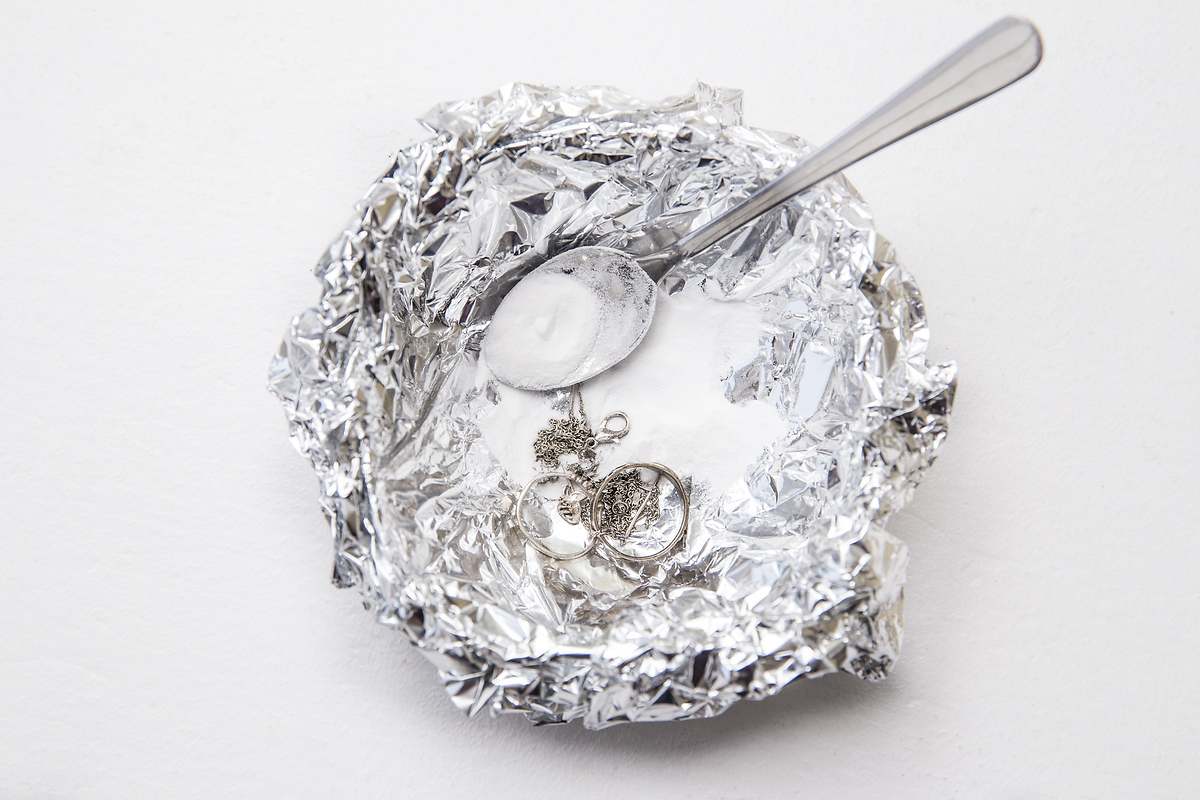
Household cleaning supplies prepared for the silver bath
You can reverse this chemical bonding through a process called electrolysis. You only need four items: baking soda, table salt, aluminum foil, and boiling water.
The aluminum foil acts as an anode in this electrochemical reaction. It literally attracts and pulls the sulfur away from the silver.
The 10-Minute Process
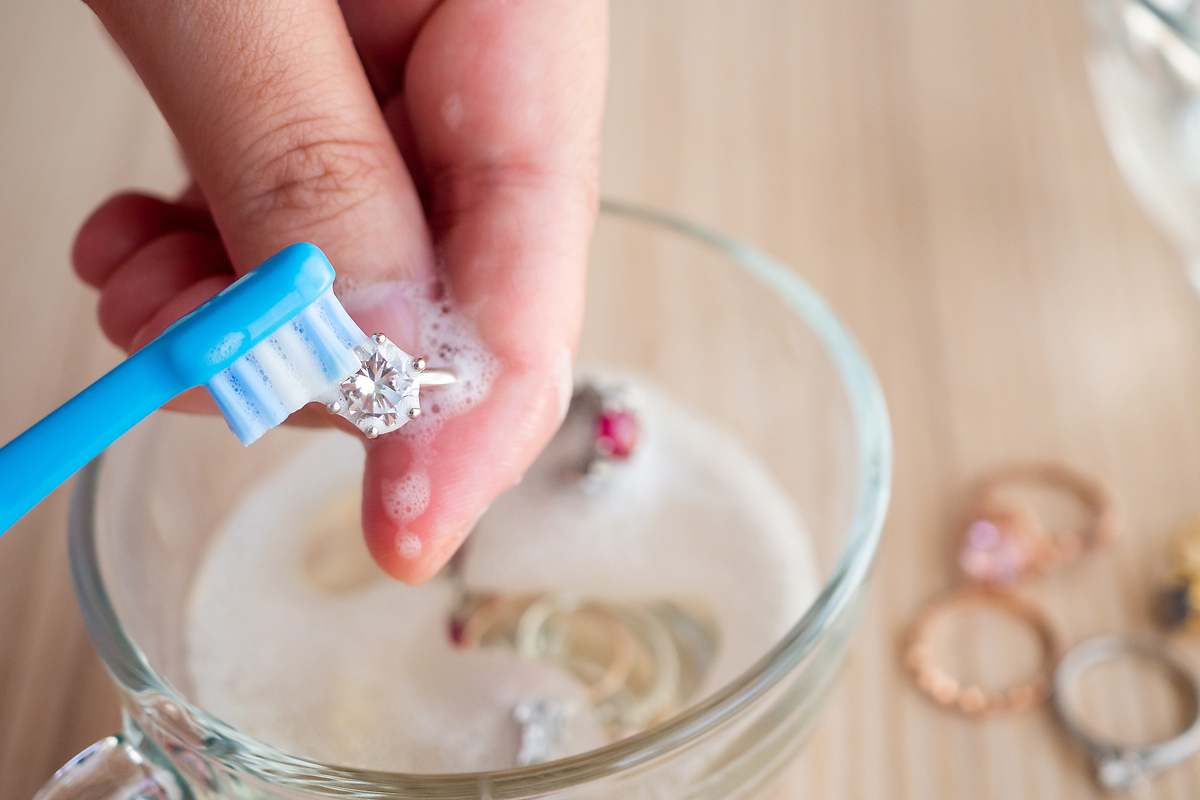
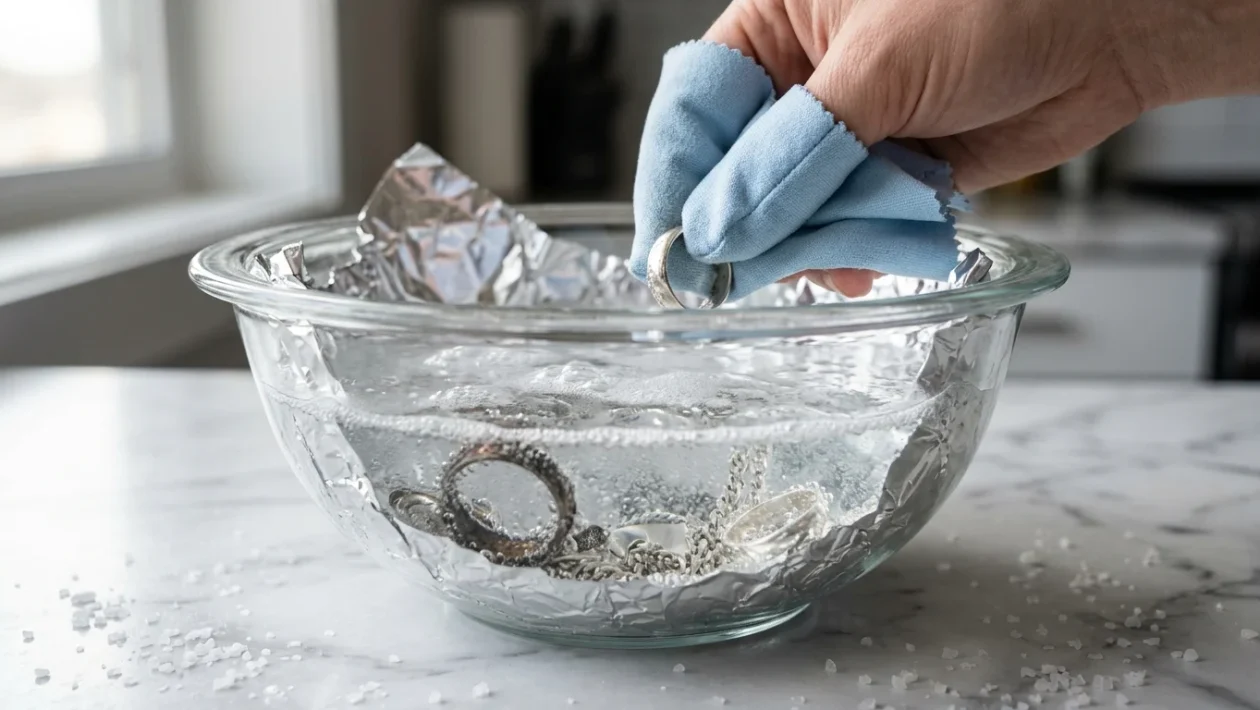
Silver jewelry submerged in the foil-lined bowl of hot water
Start by lining a heat-resistant bowl with aluminum foil, ensuring the shiny side faces up. Pour in boiling water, adding one to two tablespoons of baking soda per liter, along with a pinch of salt.
Drop your tarnished silver into the bath and let it sit for five to 10 minutes. You can stir the water gently to ensure full coverage.
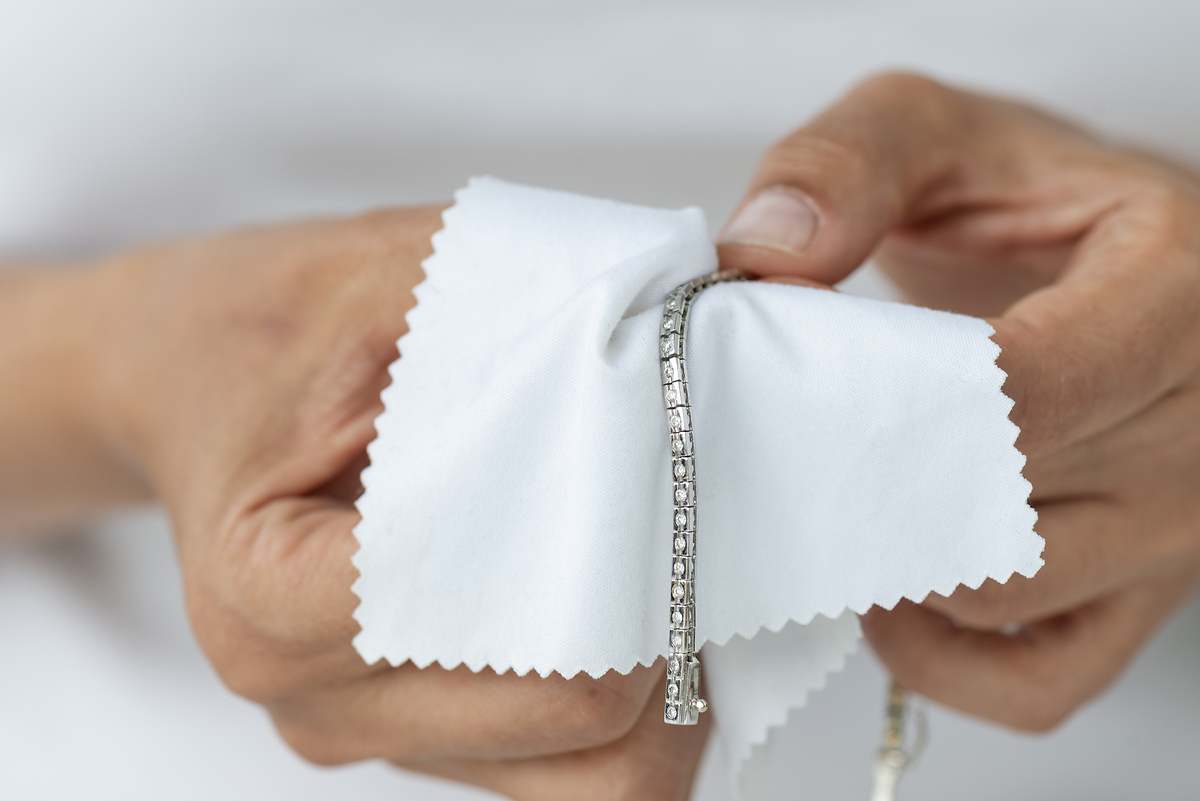
Once the time is up, carefully remove the jewelry. Rinse the pieces thoroughly under cold water to stop the reaction, then buff them dry with a soft microfiber cloth.
Crucial Restoration Warnings
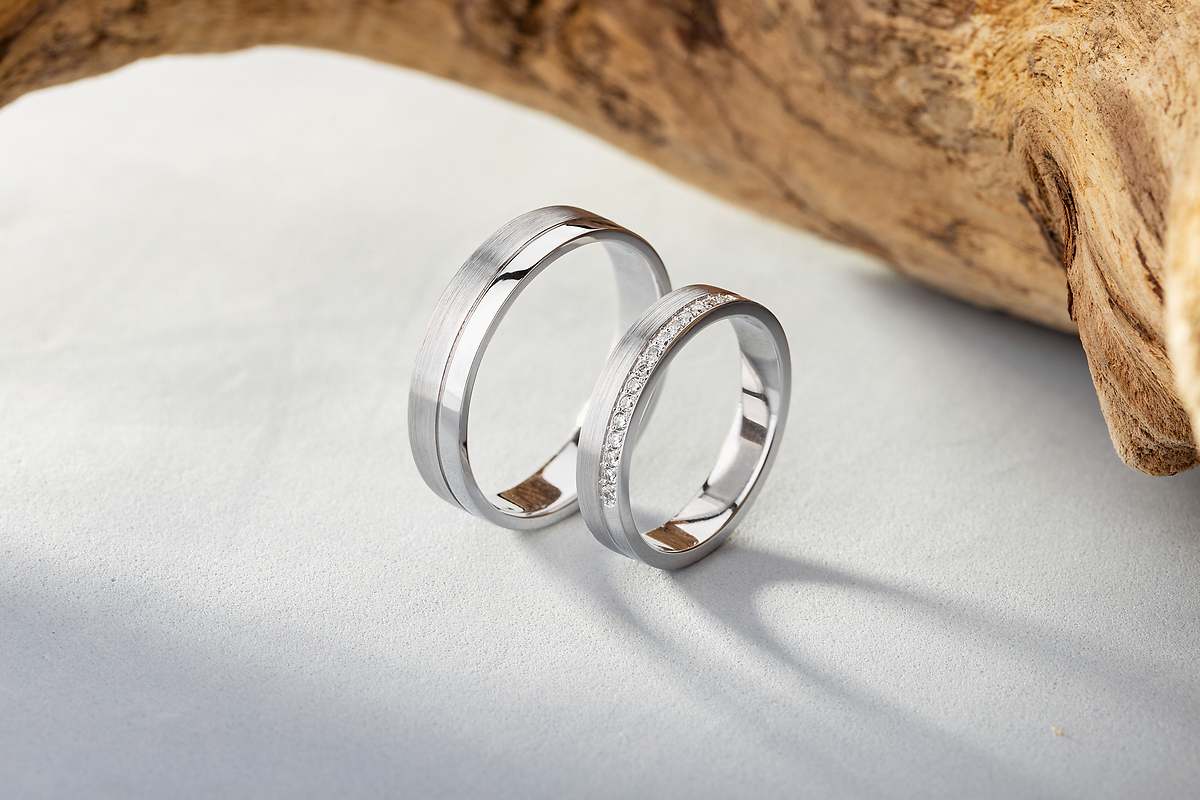
Clean, sparkling silver jewelry restored to its original shine
While highly effective for pure silver, this aggressive electrochemical process is not suitable for all jewelry types.
Keep this mixture away from pieces featuring gemstones, pearls, enamel detailing, or special coatings. The chemical bath can dissolve the adhesives holding these elements in place or strip protective layers.
Never exceed the 10-minute soaking limit. Prolonged exposure risks permanently damaging delicate or antique silver pieces.


