
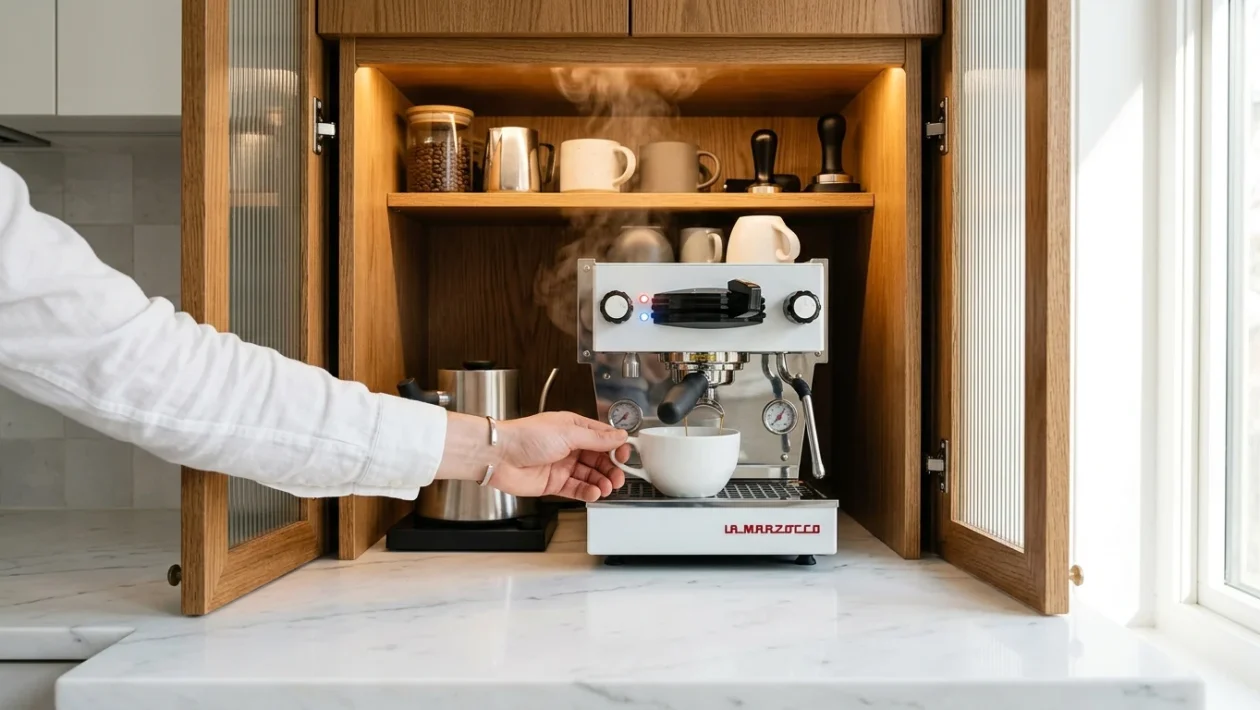
A sleek, modern kitchen with clear countertops and a built-in breakfast cabinet hiding small appliances.
For years, crowded countertops were the standard in most homes. Coffee makers, toasters, and electric kettles fought for space in plain sight. However, this dynamic has begun to shift.
Modern kitchens now prioritize visual order and space optimization. Interior design has pivoted toward clean surfaces and smart storage solutions. Homeowners are adopting specialized furniture that keeps appliances accessible without cluttering the room.
The Breakfast Cabinet: Instant Organization With Hidden Cables
The breakfast cabinet with retractable or folding doors stands out as a leading trend. On the outside, it looks like a traditional cupboard. Inside, it operates as a dedicated hub for daily appliances like coffee machines and electric kettles.
A major advantage of this setup is the integration of internal electrical outlets. Users can operate their appliances directly inside the cabinet without moving them. This eliminates visible cables, a crucial detail for maintaining a clean aesthetic.
Once breakfast is over, closing the doors instantly clears the workspace. This design has become highly popular in apartments and smaller kitchens where remodeling is not an option.
The Pantry Column: Floor-to-Ceiling Efficiency
Another alternative gaining ground is the pantry column. This floor-to-ceiling unit maximizes vertical space through a combination of closed shelves, drawers, and dedicated appliance compartments.
The pantry column is especially effective in modern kitchens where square footage is limited. It allows homeowners to hide bulky items like microwaves, blenders, and air fryers behind closed doors.
Consolidating these appliances into a single module reduces visual noise. It also centralizes kitchen traffic, giving users rapid access to everything they need in one organized spot.
The Storage Island: Combining Prep Work With Concealment
For larger kitchens, the storage island remains the dominant choice. Beyond serving as a prep surface or quick dining area, modern islands feature deep, integrated drawers designed specifically for appliance storage.
These hidden compartments easily house heavy pots, pans, and occasional-use gadgets. Keeping these items off the counters dramatically transforms the room’s aesthetic.
The island ultimately serves a dual purpose. It anchors the kitchen’s workflow while improving the room’s visual impact through aggressive clutter reduction.
Expert Rules for Appliance Placement
Strategic organization is essential for optimal kitchen functionality. Regardless of the furniture you choose, applying a few basic placement rules will maximize your space.
- Prioritize by frequency: Place daily-use appliances at a comfortable, accessible height. Store occasional-use gadgets on higher or lower shelves.
- Organize by task: Group items according to their function. Creating specific workstations speeds up daily routines.
- Eliminate visual overload: Keep the main countertops completely clear to make the room appear larger and more organized.
These layout strategies push contemporary kitchens past the era of appliance display. The result is a cleaner, more practical environment built for everyday living.


